


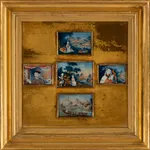
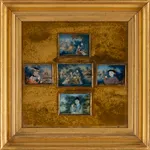
Collection of Ten Chinese Export reverse glass miniature paintings framed as a pair, circa 1790-1800
oil on glass, mounted in gilded copper panels in English Regency period carved giltwood frames
7205B
Further images
-
(View a larger image of thumbnail 1
)

-
(View a larger image of thumbnail 2
)
-
(View a larger image of thumbnail 3
)
-
(View a larger image of thumbnail 4
)

-
(View a larger image of thumbnail 5
)
-
(View a larger image of thumbnail 6
)

-
(View a larger image of thumbnail 7
)

-
(View a larger image of thumbnail 8
)

Provenance
Purchased by Mr P. at Mr Read's Sale at Holbrook, near Ipswich 1875. Scan of a manuscript available with an anecdote about its ownership.Private UK Collection by descent.
Ten miniature Chinese reverse glass paintings depicting pastoral figures and scenes of the Qing Dynasty. Symbolism: Though each scene is small, it is rich with symbolism. In one miniature, a...
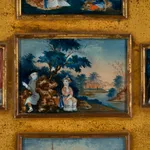
Ten miniature Chinese reverse glass paintings depicting pastoral figures and scenes of the Qing Dynasty.
Symbolism:
Though each scene is small, it is rich with symbolism. In one miniature, a finely dressed lady holds a red parrot on her arm. These birds were considered auspicious and bringers of good fortune in China due to their colour. They are also a reference to the Zhuque, the mythical vermillion bird of the south which represents Chinese constellations and symbolises prosperity, growth and rebirth.
Chrysanthemum flowers feature prominently in several of the miniatures; they adorn the liangbatou hair ornaments of the ladies and are held in their hands and baskets. Western species of chrysanthemums known as occidental flowers, were first bought over from Europe to China by travellers in the 18th Century. Much like tulips in Holland, chrysanthemums became incredibly popular and important flowers within Chinese culture. Many artists poets were entranced by their beauty and unique character. The Emperor Qianlong himself wrote prolifically about them and commissioned the renowned Jesuit artist Father Castiglione to paint chrysanthemums in the western style. As one of the few flowers of late autumn, they became associated with the Chong Yang Festival; a holiday celebrating the ninth day of the ninth month of the Chinese calendar. During this occasion, also known as the chrysanthemum festival, the flowers are worn to banish bad luck and invite good fortune. Their late blooming led them to be seen as flowers of luck and longevity with mythic status.
Costume and Setting:
All of the miniatures are idyllic waterside pastoral scenes. The river which flows through the background is likely the Pearl River and the sailing boats are traditional sampan, both of which were integral parts of the Canton trade system.
Each figure wears the distinctive Manchurian costume of the Qing Dynasty. Qizhuang, the traditional clothing system of the Manchu people was strictly enforced during the Qing dynasty and deviation from accepted hairstyles and costumes could result in death. The intricate, but not overtly extravagant liangbatou hairstyles of the ladies show that whilst they are not royal, they do belong to the elite. The distinctive hats of the men denote them as civic officials in the service of the Qing. The foliage remains abundant in each miniature, giving little clues about the time of year, however due to the strict sumptuary laws, it is possible to place the scenes within the seasons. The miniatures in which the men wear conical hats take place during the summer and the scenes in which the men wear more extravagant hats; the tall futou hats and red and black nuanmao hats, take place in winter. The scene of the lady wearing an ermine duanzhou surcoat can also be surmised as taking place in winter.
Chinese Reverse Glass Painting:
Chinese reverse glass paintings were produced by an artist painting an image onto the back of a sheet of glass. The paintings are distinctive for their luminosity, gloss and depth of colour which are seldom achieved in other mediums. Due to their fragile nature, far fewer reverse glass paintings survive, compared to those made of traditional, more durable materials such as canvas. Of those that do, their subjects are predominantly Chinese landscapes which began being produced for export to western markets in the late 18th Century and then grew in popularity with the domestic Chinese market as the 19th Century progressed. Chinese reverse glass paintings are unique to other forms of reverse glass painting due to their use of oil paints rather than glue-based water colours and white painted background as opposed black to illuminate the colours.
Whilst popular in Europe, reverse glass painting was unknown in China until the arrival of the Italian Jesuit priest Father Giuseppe Castiglione in 1715. Through his art, Castiglione, also known by his Chinese name Lang Shining, found favour with the Emperors Kangxi, Yongzheng and Qianlong. Despite the period being a dangerous time for the Jesuit mission in China, Castiglione’s work was so admired by the emperors, that he was entrusted with the decoration of the Imperial Garden in Beijing.
The popularity of reverse glass painting grew and by the late 1700’s a network of glass painting workshops had developed in Southeast China. With the evolution of the Canton trade system, foreign visitors to cities such as Macau and Guangzhou were eager for souvenirs of their travels and maritime traders sought goods for export that would appeal to the western market. Reverse glass painting was an attractive craft which could be produced quickly and affordably in Chinese workshops to suit Western tastes.
On the orders of the emperor, Westerners were confined to foreign quarters in major cities and allotted trade routes only, however visitors were still eager to see the forbidden kingdom. Chinese artisans produced reverse glass paintings of scenes and landscapes which travellers were not permitted to visit. Works such as these enabled foreigners to experience Chinese landscapes and lifestyles otherwise prohibited to them.
Symbolism:
Though each scene is small, it is rich with symbolism. In one miniature, a finely dressed lady holds a red parrot on her arm. These birds were considered auspicious and bringers of good fortune in China due to their colour. They are also a reference to the Zhuque, the mythical vermillion bird of the south which represents Chinese constellations and symbolises prosperity, growth and rebirth.
Chrysanthemum flowers feature prominently in several of the miniatures; they adorn the liangbatou hair ornaments of the ladies and are held in their hands and baskets. Western species of chrysanthemums known as occidental flowers, were first bought over from Europe to China by travellers in the 18th Century. Much like tulips in Holland, chrysanthemums became incredibly popular and important flowers within Chinese culture. Many artists poets were entranced by their beauty and unique character. The Emperor Qianlong himself wrote prolifically about them and commissioned the renowned Jesuit artist Father Castiglione to paint chrysanthemums in the western style. As one of the few flowers of late autumn, they became associated with the Chong Yang Festival; a holiday celebrating the ninth day of the ninth month of the Chinese calendar. During this occasion, also known as the chrysanthemum festival, the flowers are worn to banish bad luck and invite good fortune. Their late blooming led them to be seen as flowers of luck and longevity with mythic status.
Costume and Setting:
All of the miniatures are idyllic waterside pastoral scenes. The river which flows through the background is likely the Pearl River and the sailing boats are traditional sampan, both of which were integral parts of the Canton trade system.
Each figure wears the distinctive Manchurian costume of the Qing Dynasty. Qizhuang, the traditional clothing system of the Manchu people was strictly enforced during the Qing dynasty and deviation from accepted hairstyles and costumes could result in death. The intricate, but not overtly extravagant liangbatou hairstyles of the ladies show that whilst they are not royal, they do belong to the elite. The distinctive hats of the men denote them as civic officials in the service of the Qing. The foliage remains abundant in each miniature, giving little clues about the time of year, however due to the strict sumptuary laws, it is possible to place the scenes within the seasons. The miniatures in which the men wear conical hats take place during the summer and the scenes in which the men wear more extravagant hats; the tall futou hats and red and black nuanmao hats, take place in winter. The scene of the lady wearing an ermine duanzhou surcoat can also be surmised as taking place in winter.
Chinese Reverse Glass Painting:
Chinese reverse glass paintings were produced by an artist painting an image onto the back of a sheet of glass. The paintings are distinctive for their luminosity, gloss and depth of colour which are seldom achieved in other mediums. Due to their fragile nature, far fewer reverse glass paintings survive, compared to those made of traditional, more durable materials such as canvas. Of those that do, their subjects are predominantly Chinese landscapes which began being produced for export to western markets in the late 18th Century and then grew in popularity with the domestic Chinese market as the 19th Century progressed. Chinese reverse glass paintings are unique to other forms of reverse glass painting due to their use of oil paints rather than glue-based water colours and white painted background as opposed black to illuminate the colours.
Whilst popular in Europe, reverse glass painting was unknown in China until the arrival of the Italian Jesuit priest Father Giuseppe Castiglione in 1715. Through his art, Castiglione, also known by his Chinese name Lang Shining, found favour with the Emperors Kangxi, Yongzheng and Qianlong. Despite the period being a dangerous time for the Jesuit mission in China, Castiglione’s work was so admired by the emperors, that he was entrusted with the decoration of the Imperial Garden in Beijing.
The popularity of reverse glass painting grew and by the late 1700’s a network of glass painting workshops had developed in Southeast China. With the evolution of the Canton trade system, foreign visitors to cities such as Macau and Guangzhou were eager for souvenirs of their travels and maritime traders sought goods for export that would appeal to the western market. Reverse glass painting was an attractive craft which could be produced quickly and affordably in Chinese workshops to suit Western tastes.
On the orders of the emperor, Westerners were confined to foreign quarters in major cities and allotted trade routes only, however visitors were still eager to see the forbidden kingdom. Chinese artisans produced reverse glass paintings of scenes and landscapes which travellers were not permitted to visit. Works such as these enabled foreigners to experience Chinese landscapes and lifestyles otherwise prohibited to them.
34
of
34